
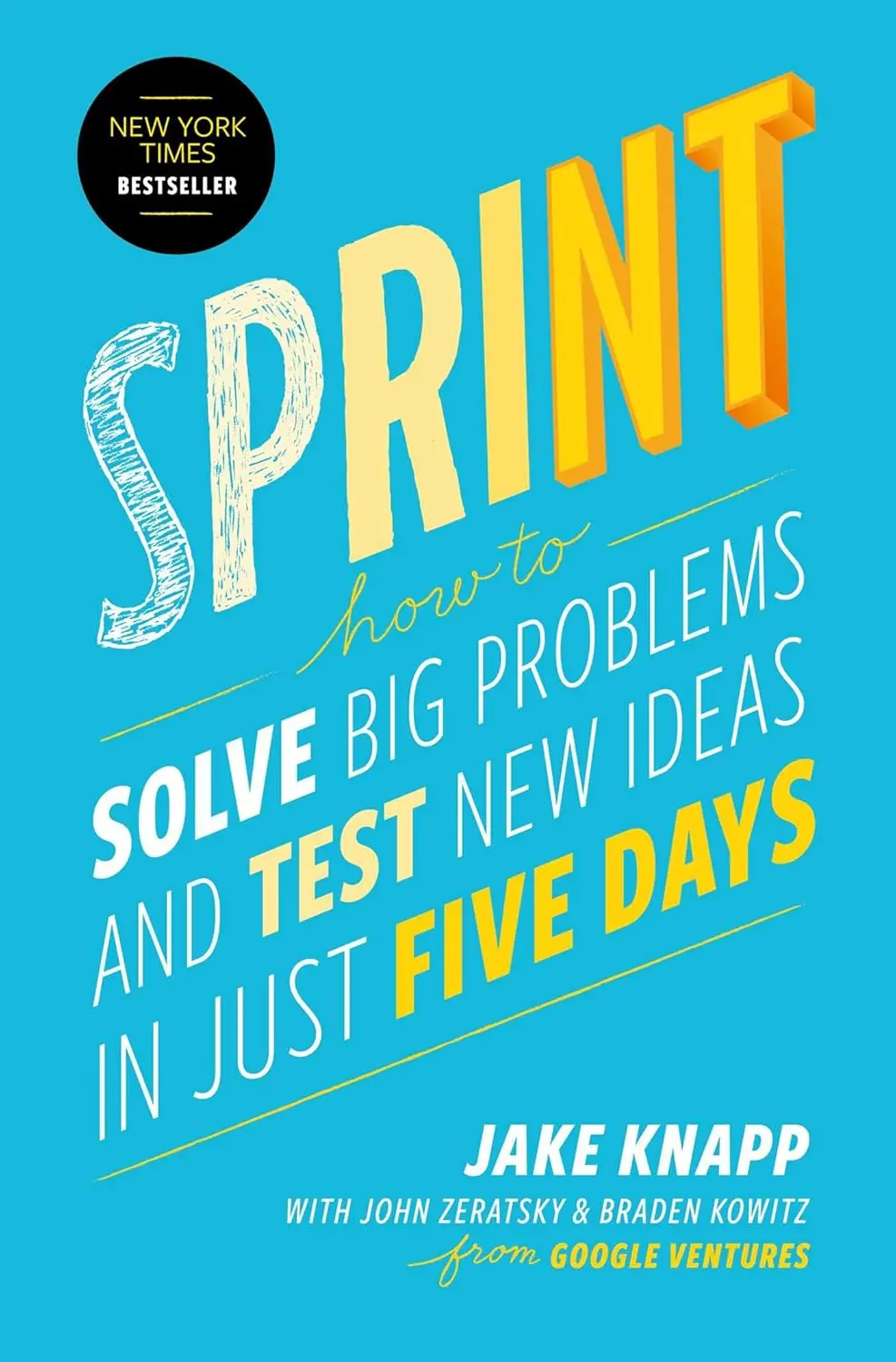
Sprint describes a structured five-day process. Monday: map the problem and pick a target. Tuesday: sketch competing solutions individually (no brainstorming, which tends to produce consensus rather than originality). Wednesday: decide which solution to prototype. Thursday: build a realistic-looking prototype (it does not need to work, just look like it does). Friday: test the prototype with five real customers and watch what happens.
The process was developed at Google Ventures, where Knapp ran over 100 sprints with portfolio companies. The book walks through each day with detailed instructions: what to do, how long to spend on each exercise, what materials you need, and how to facilitate the group. It is specific enough to follow without a consultant.
Several design choices make the sprint effective. Having a “Decider” (usually the founder or CEO) who makes the final call prevents democratic decision-making that waters down ideas. Sketching solutions individually before sharing them prevents groupthink. Building a prototype in a single day forces simplicity. Testing with real users on Friday provides data instead of opinions.
The five-day constraint is the most important feature. Without it, teams spend weeks debating, researching, and refining before they have any evidence that the idea works. The sprint compresses the entire cycle from idea to customer feedback into one week.
For founders, sprints are useful whenever you face a high-stakes decision with multiple possible approaches and no clear data pointing to one answer. Should the product do X or Y? Which customer segment should we target first? What should the onboarding experience look like? A sprint can answer these questions in a week rather than a quarter.
At about 280 pages, the book reads quickly. The writing is practical and direct. Knapp includes templates, checklists, and photographs from real sprints. Some of the exercises feel overly prescriptive (precisely how many Post-it notes to use, exactly where to stand in the room), but the underlying structure is flexible enough to adapt to different contexts.
