
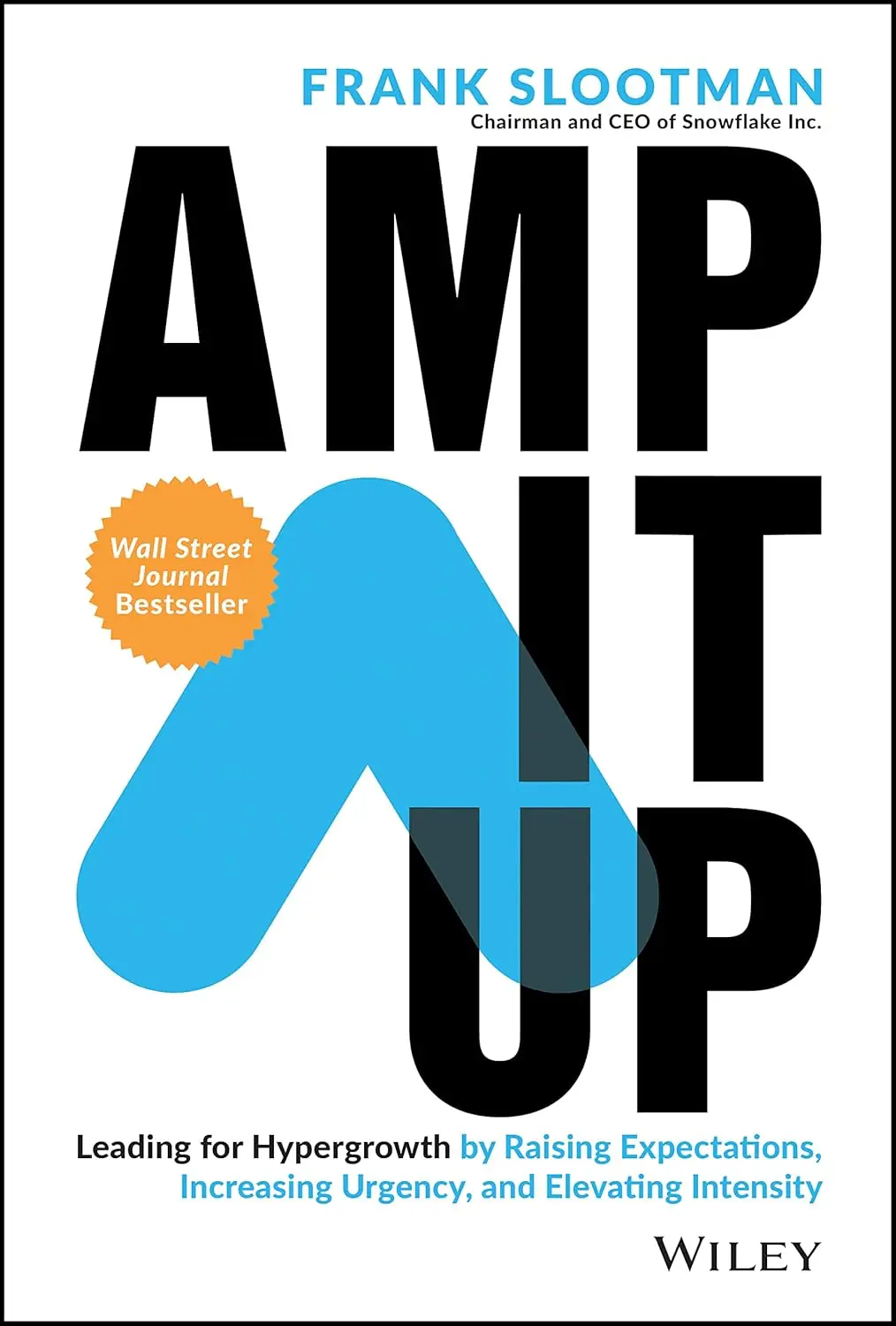
Slootman’s track record gives him unusual credibility. He took Data Domain from struggling to a $2.4 billion acquisition by EMC. He took ServiceNow from $100 million to over $1 billion in revenue as CEO. Then he took Snowflake public in what was the largest software IPO in history at the time. The book explains the operating philosophy behind all three.
The core idea is that most organizations operate well below their potential because they tolerate too much: too many priorities, too many meetings, too many people doing unclear work, too many strategic initiatives that go nowhere. Slootman’s answer is to raise expectations across the board and make it uncomfortable to coast.
He covers specific practices. On priorities: pick the three things that matter and stop doing everything else. On meetings: cut them in half and make the remaining ones shorter and more focused. On hiring: look for people who run toward problems rather than away from them. On speed: decisions should be made in hours or days, not weeks. On culture: clarity and directness beat consensus and comfort.
Slootman is unapologetic about his intensity. He acknowledges that his approach is not for everyone and that some people leave companies he runs because the pace is too much. He considers this a feature, not a bug. The people who stay are the ones who want to operate at a high level.
For founders, the book is most relevant during the scaling phase, when a company has found product-market fit and needs to grow fast. The advice is less applicable to very early-stage companies where exploration and flexibility matter more. But once you know what you are building and need to execute, Slootman’s framework is one of the most concentrated distillations of how to run a fast-growing tech company.
Jensen Huang has praised Slootman’s approach. At about 210 pages, the book is short and direct. Slootman writes the way he manages: no wasted words, no hedging, no apology for being demanding. It will either energize you or put you off, which is probably the point.
