
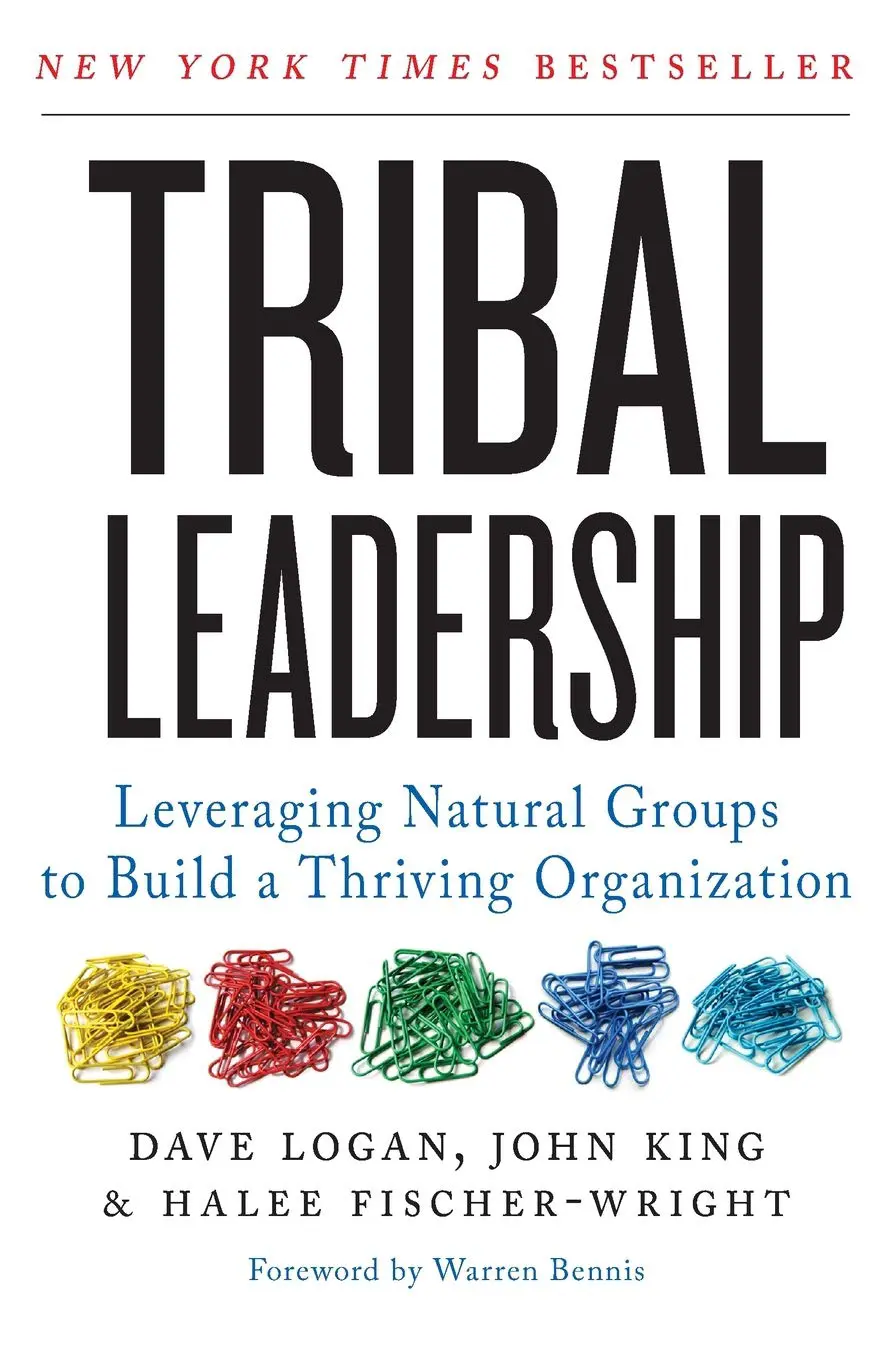
Every organization is a collection of tribes, groups of 20 to 150 people who know each other. Logan, King, and Fischer-Wright spent eight years studying these groups across two dozen companies and identified five distinct cultural stages.
Stage One is despair: “life sucks.” People at this stage are hostile and disconnected. Stage Two is apathy: “my life sucks.” People show up but do not care. Stage Three is individual achievement: “I’m great (and you’re not).” This is where most professionals operate, competing with peers for personal advancement. Stage Four is team pride: “we’re great.” People collaborate around shared values. Stage Five is rare: “life is great.” Teams at this stage are focused on making a dent in the world, not on beating competitors.
The practical value of the book is in the specific actions for moving people from one stage to the next. You cannot skip stages. A leader who tries to build a Stage Four team while most people are at Stage Two will fail. Instead, the book provides “leverage points” for each transition: Stage Two to Three requires one-on-one encouragement and helping people see their individual strengths. Stage Three to Four requires building “triads” (three-person relationships based on shared values rather than personal transaction).
Tony Hsieh adopted many of these ideas at Zappos, where the company’s culture became a primary competitive advantage and recruiting tool. The book influenced how he thought about tribal dynamics inside the organization.
For founders, the most useful sections are about recognizing which stage your team is at (most founders assume their team is at Stage Four when it is actually at Stage Three) and about the specific moves that shift culture. Culture change is not about posters on the wall or all-hands speeches. It is about the structure of relationships within the tribe.
At about 300 pages, the book is well-organized. The research base gives it more credibility than typical culture books that rely on anecdotes. The writing style is accessible, though some of the terminology (stages, leverage points, triads) takes a chapter or two to internalize.
