
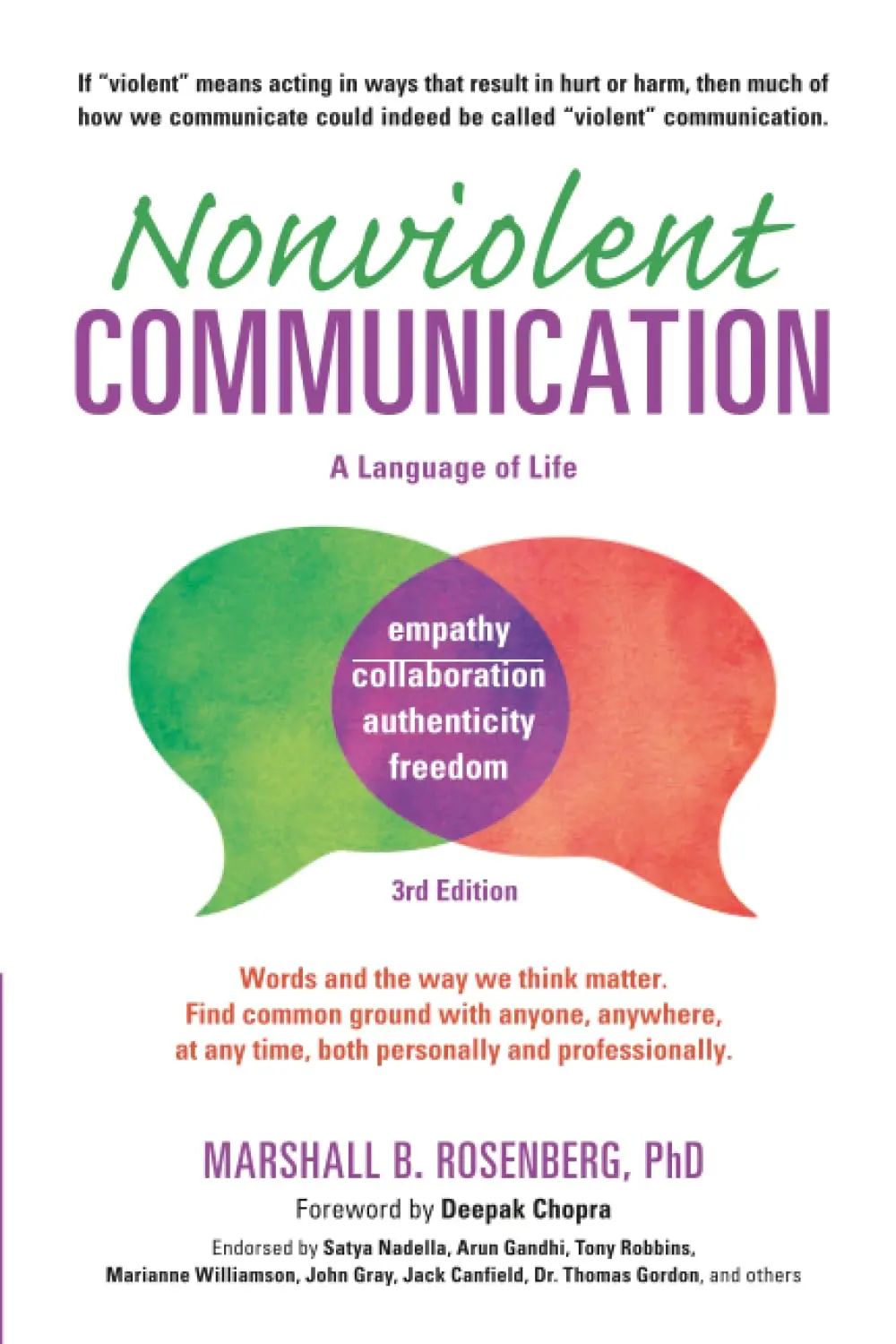
Rosenberg developed Nonviolent Communication (NVC) over several decades of peace work in conflict zones including Rwanda, Sri Lanka, Serbia, and the Middle East. The method is built on a simple premise: most communication breakdowns happen because people express their needs as criticism, judgment, or demands, which triggers defensiveness rather than cooperation.
The four-step process works like this. First, observe the situation without mixing in evaluation. “You were late to three meetings this week” is an observation. “You don’t respect anyone’s time” is a judgment disguised as one. Second, name the feeling the situation creates in you. Frustrated, worried, disappointed, whatever it actually is. Third, connect that feeling to an unmet need. You are not frustrated because the other person is bad. You are frustrated because you need reliability and it is not being met. Fourth, make a specific, doable request. Not a demand. A request the other person can say no to.
The distinction between requests and demands is central to the method. A demand carries an implicit threat: do this or there will be consequences. A request invites cooperation. Rosenberg argues that people are far more willing to meet your needs when they do not feel coerced.
The book is filled with dialogue examples that show the method applied to workplace conflicts, family arguments, and negotiations. Some of the examples can feel scripted, which is a common criticism. Real conversations do not go this smoothly. But the underlying framework holds up as a mental model for how to have difficult conversations without escalating them.
Satya Nadella famously gave this book to his executive team when he took over as Microsoft CEO in 2014, signaling a shift away from the confrontational culture that had defined the company under Steve Ballmer. Tony Robbins and Sheryl Sandberg have also recommended it.
For founders, the applications are everywhere: cofounder disagreements, performance feedback, investor negotiations, customer complaints, and team conflicts. The method does not make these conversations easy, but it gives you a structure for having them without making things worse. The book is about 260 pages and includes exercises at the end of each chapter.
