
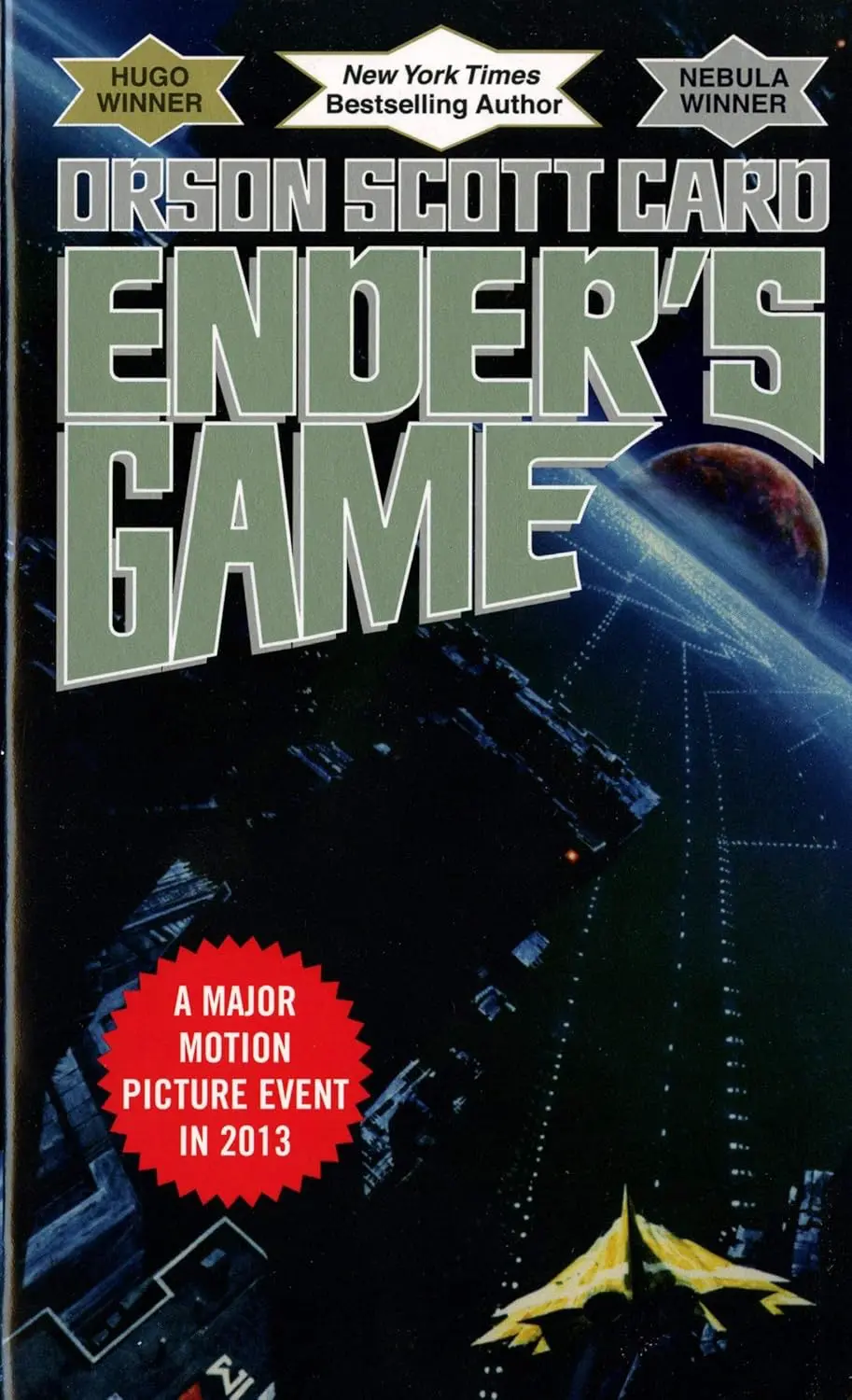
Ender’s Game follows Andrew “Ender” Wiggin, a six-year-old recruited to Battle School, an orbital military academy where children are trained through increasingly complex war games. The adults running the program believe Ender may be humanity’s last hope against the alien Buggers, and they manipulate his environment to push him to his limits.
Ender is brilliant but isolated. The teachers deliberately prevent him from forming lasting alliances, believing that dependence on others will weaken him. He must lead armies of older children who resent him, solve problems with no help from above, and figure out what is real and what is simulation. The final twist, which readers either see coming or do not, reframes everything that preceded it.
The book works as a page-turner, but its lasting popularity among tech founders and business leaders comes from its treatment of strategy and leadership. Ender wins not by following the rules but by understanding the game at a deeper level than his opponents. He asks “what is the actual objective?” rather than “what are the expected moves?” This first-principles approach to problem-solving maps directly onto how the best founders think about competition.
The ethical questions are equally interesting. The adults who train Ender deliberately lie to him, isolate him, and cause him psychological harm in pursuit of a greater good. Is this justified? The book does not answer cleanly. Card lets the reader sit with the discomfort of a system that produces results by breaking the people inside it.
For business readers, the relevant themes are: how to lead when you are younger or less experienced than the people around you, how to think about problems from first principles rather than convention, and the cost of winning at all costs. Palmer Luckey, Peter Thiel, Elon Musk, and Mark Zuckerberg have cited it as a favorite.
The book is about 320 pages and reads fast. It won both the Hugo and Nebula Awards when published in 1985. The sequels take the story in a more philosophical direction, but the original stands alone as a sharp, compact novel about strategy, leadership, and moral ambiguity.
