
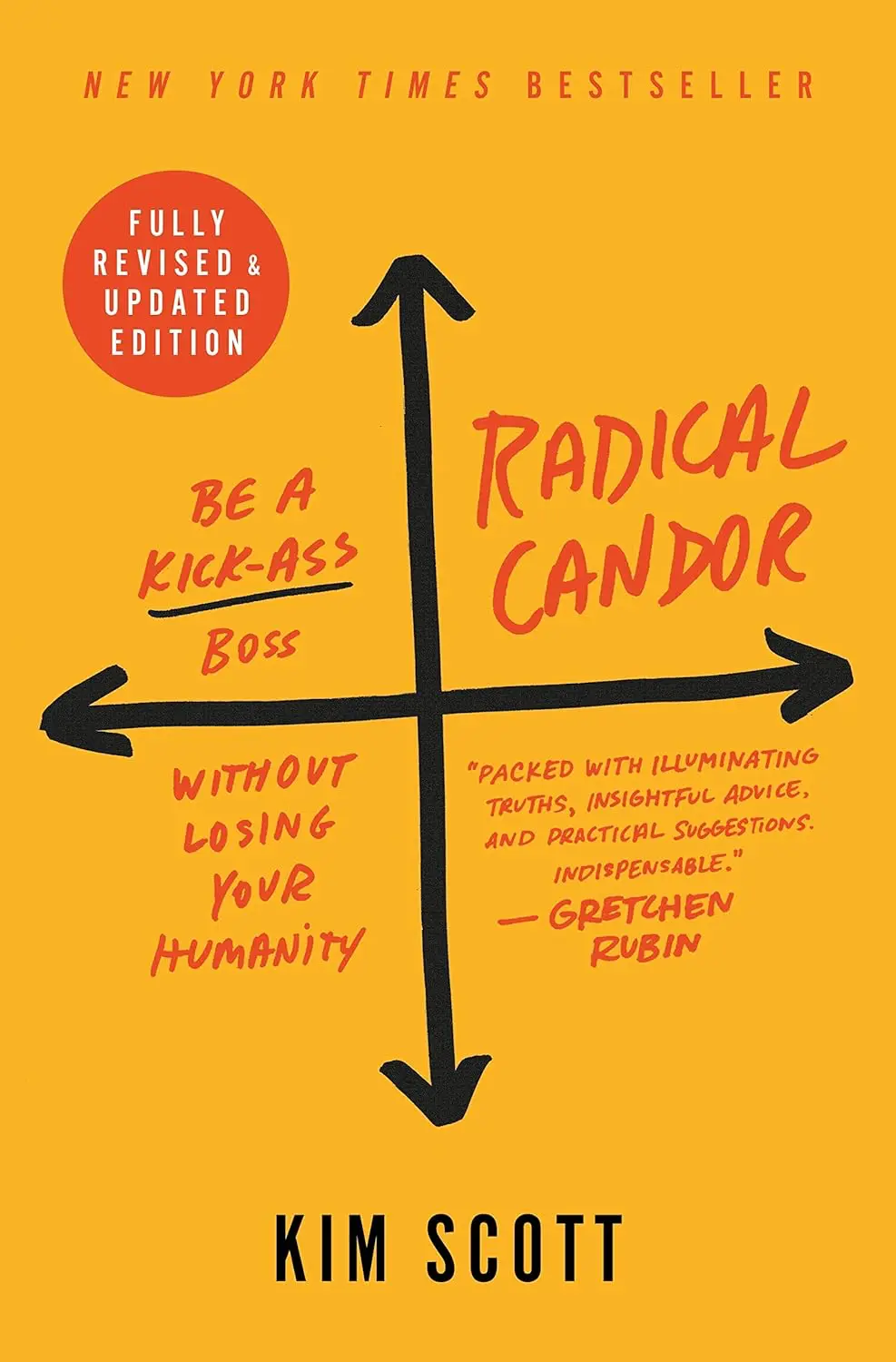
Radical Candor is built around a 2×2 matrix. One axis is “Care Personally” (do you actually give a damn about the person?). The other is “Challenge Directly” (are you willing to tell them the truth?). The four quadrants are: Radical Candor (high care, high challenge), Obnoxious Aggression (low care, high challenge), Ruinous Empathy (high care, low challenge), and Manipulative Insincerity (low care, low challenge).
Most managers default to Ruinous Empathy. They care about their people and want to be liked, so they avoid giving tough feedback. The result is that problems fester, underperformers stay in roles too long, and the team’s best people leave because they are carrying others. Scott argues that failing to challenge someone directly is not kind. It is selfish, because you are prioritizing your own comfort over their growth.
The practical sections cover how to give praise (be specific about what was good and why), how to give criticism (start with care, be direct about the issue, focus on the behavior not the person), and how to create a culture where feedback flows in all directions, not just from manager to report.
Scott draws on her experience managing teams at Google (under Sheryl Sandberg) and at Apple (under several senior executives). The stories are specific and grounded, covering real situations like firing someone she should have coached, and coaching someone she should have fired. She does not pretend to have gotten it right every time.
For founders, Radical Candor addresses one of the hardest parts of running a company: giving people honest feedback. Most first-time managers are terrible at this because nobody taught them how, and the default behaviors (avoiding conflict or being blunt without empathy) both produce bad results. Scott’s framework is simple enough to remember and apply in daily interactions.
The book is about 250 pages. Sheryl Sandberg and Reid Hoffman have recommended it. The revised edition (2019) includes updated examples and additional material on how to handle specific feedback situations. It is one of the most-recommended management books in Silicon Valley for a reason: the problem it addresses is universal.
