
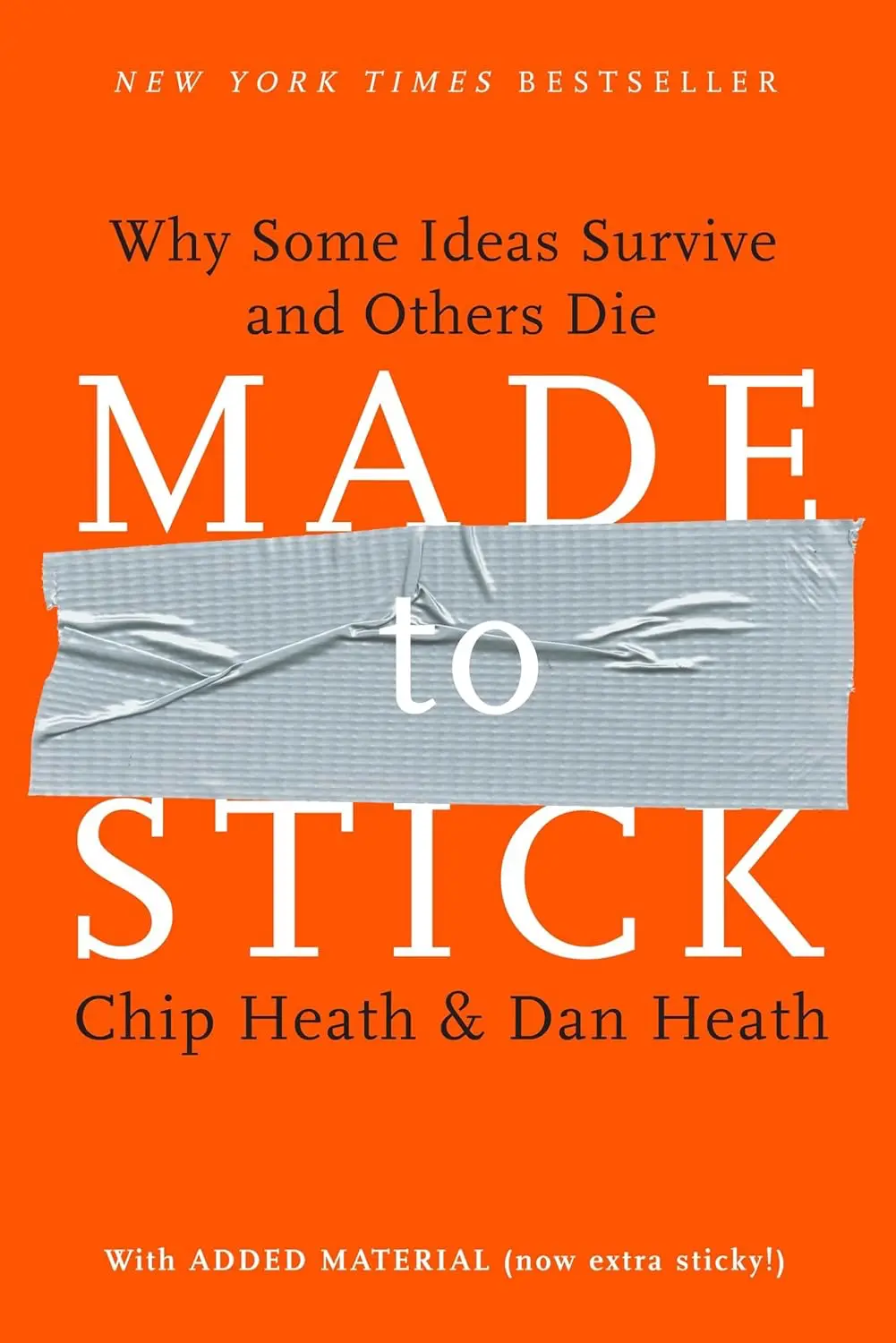
Made to Stick starts with a question: why do urban legends spread effortlessly while important ideas struggle to get traction? The answer, according to Chip and Dan Heath, is that sticky ideas share six common traits. They organized these into the acronym SUCCESs: Simple, Unexpected, Concrete, Credible, Emotional, and Stories.
Simple means finding the core of your message and expressing it in a compact way. Not dumbing it down, but stripping it to its most important element. Unexpected means breaking a pattern to get attention, then holding it by creating a curiosity gap. Concrete means avoiding abstraction and using specific, sensory language that people can picture. Credible means making your claims believable through statistics, authorities, or testable credentials. Emotional means making people care by connecting to feelings, not just logic. Stories means packaging ideas in narrative form because humans remember stories far better than bullet points.
Each chapter covers one principle with case studies ranging from a nonprofit’s anti-littering campaign to how Southwest Airlines maintains a clear strategy across thousands of employees. The Heaths are both academics and practitioners (Chip teaches at Stanford, Dan worked in education startups), and the writing balances research with practical examples.
For founders, the book is directly useful. Pitching investors, explaining a product to customers, rallying a team around a vision, and writing marketing copy all require making ideas stick. The SUCCESs framework gives you a diagnostic: if your pitch is not landing, which of the six elements is missing?
The book is around 290 pages and reads quickly. It was based partly on a Stanford course Chip Heath taught on why some ideas survive, and the tone is energetic without being breathless. Seth Godin, Ramit Sethi, and Rand Fishkin have recommended it. The main criticism is that the framework can feel formulaic when applied mechanically, but as a mental checklist for communication, it is one of the most practical books in the genre.
