
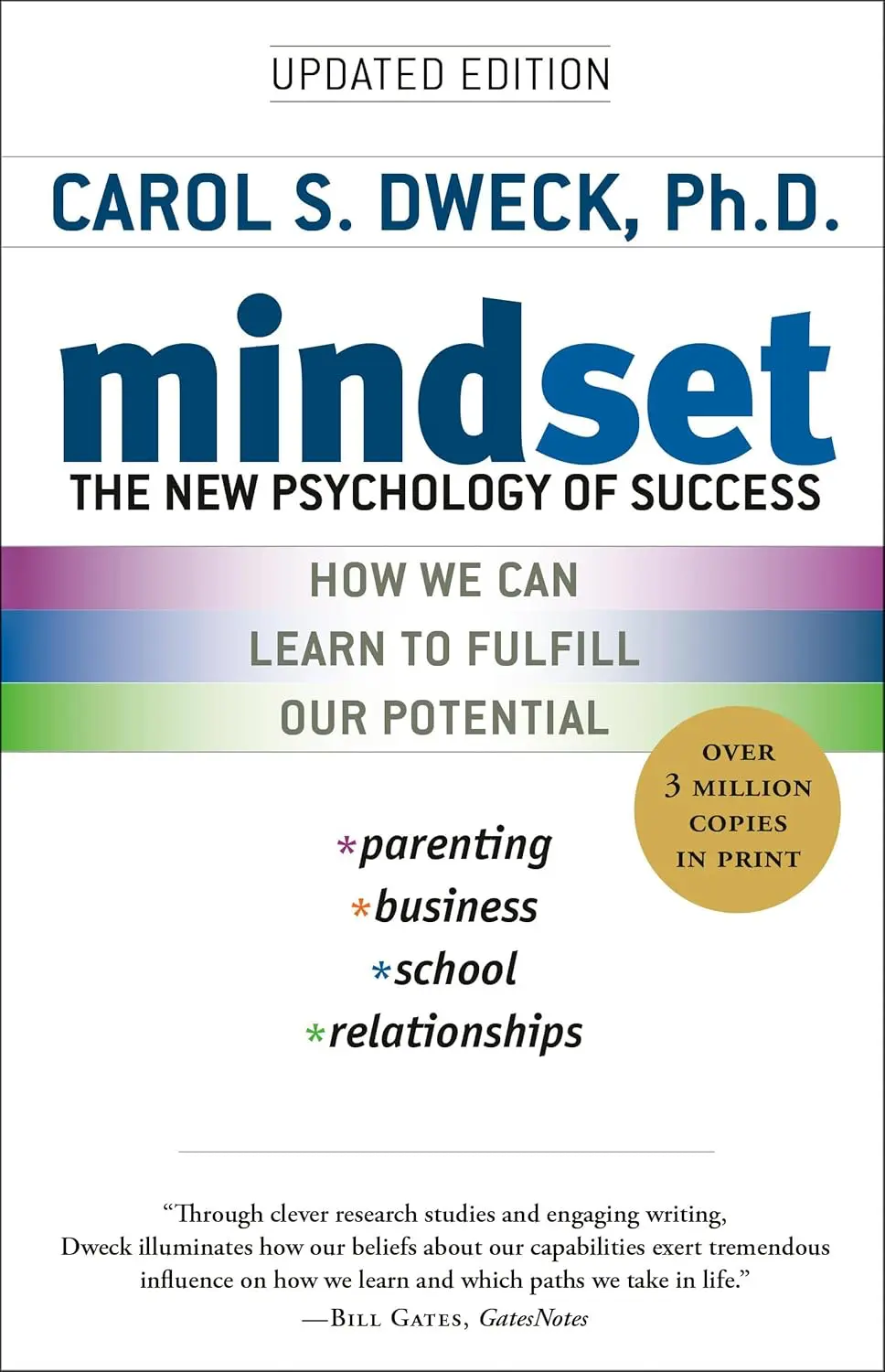
Dweck’s research spans decades and covers students, athletes, business leaders, and relationships. The core finding is that people who believe their abilities are fixed (the “fixed mindset”) respond to setbacks by withdrawing, making excuses, or avoiding challenges that might expose their limitations. People who believe their abilities can grow through effort and learning (the “growth mindset”) respond to setbacks by trying harder, adjusting their approach, and seeking feedback.
The effects compound over time. Fixed-mindset people avoid the very challenges that would help them grow, creating a self-fulfilling prophecy. Growth-mindset people seek out difficulty, which leads to more learning, which leads to more ability, which reinforces the belief that effort works.
Dweck applies this framework across domains. In education, students praised for being smart develop fixed mindsets and avoid hard problems. Students praised for their effort develop growth mindsets and persist longer. In sports, athletes with growth mindsets recover better from injuries and losses. In business, leaders with growth mindsets build cultures where people are more willing to innovate and take risks.
The book’s most useful section for founders is the chapter on business leadership. Dweck contrasts CEOs who were more interested in protecting their reputation for genius (fixed mindset) with those who were more interested in learning and improving the organization (growth mindset). The growth-mindset CEOs made better long-term decisions because they were not threatened by information that challenged their views.
Satya Nadella credited this book with influencing how he transformed Microsoft’s culture after becoming CEO in 2014. Bill Gates, Daniel Pink, and Adam Grant have also recommended it.
One criticism of the book is that the growth/fixed distinction can be oversimplified in popular usage. Dweck herself has pushed back against the idea that growth mindset means “just try harder.” The actual research is more nuanced: it is about how you interpret failure and feedback, not just whether you work hard. But as a mental model for self-awareness, the framework is practical. At around 300 pages, the book is accessible. Some readers find the examples repetitive, but the core ideas are solid and well-supported.
