
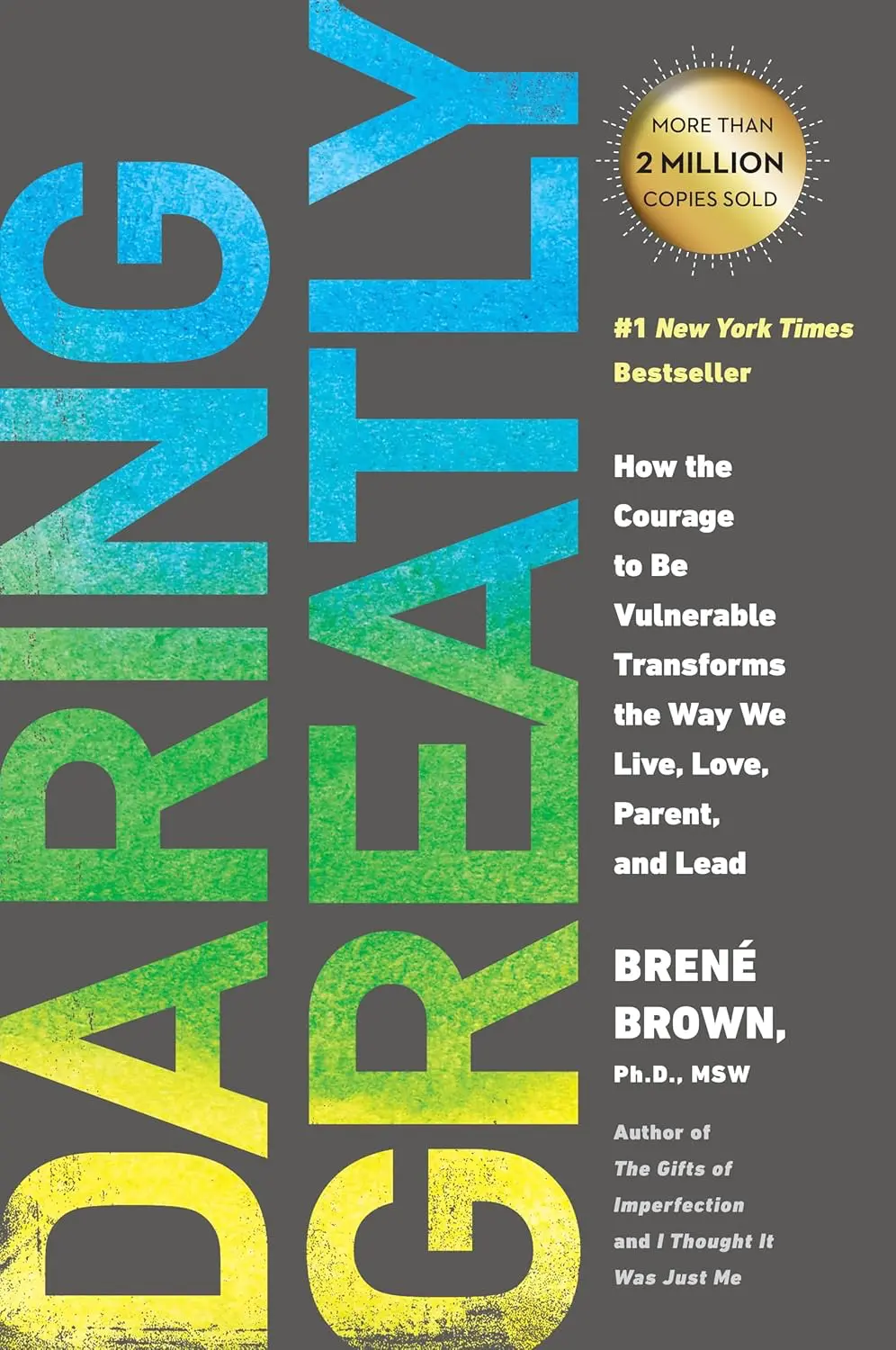
Brene Brown’s research began with a straightforward question about human connection. What she found, after thousands of interviews and years of data analysis, was that the people who had the strongest connections also had something else in common: they were willing to be vulnerable. They did not avoid uncertainty, risk, or emotional exposure. They walked into it.
Daring Greatly takes that finding and applies it to work, parenting, education, and leadership. Brown defines vulnerability not as weakness but as emotional risk, exposure, and uncertainty. Asking for help is vulnerable. Launching a product that might fail is vulnerable. Giving honest feedback is vulnerable. Having a difficult conversation with a cofounder is vulnerable. The book argues that treating these moments as threats to avoid, rather than opportunities to engage, is what makes people and organizations stagnate.
The sections on leadership are the most relevant for founders. Brown describes how leaders who model vulnerability (admitting mistakes, asking questions they do not know the answers to, acknowledging when they are uncertain) create teams where people are more honest, more creative, and more willing to take calculated risks. Leaders who project invincibility, by contrast, create cultures where people hide mistakes and avoid speaking up.
Brown also covers shame, which she distinguishes from guilt. Guilt says “I did something bad.” Shame says “I am bad.” Shame is corrosive in organizations because it discourages the kind of risk-taking that growth requires. If people feel that failure will define them rather than teach them, they stop trying anything new.
The book draws on both qualitative research (interviews, case studies) and quantitative data. Brown’s writing is accessible and personal without being soft. She includes stories from her own life and work, including a particularly honest account of her own reaction to her TED talk going viral and the criticism that followed.
Sheryl Sandberg, Bill Gates, and Oprah Winfrey have recommended it. For founders, the practical takeaway is that building a culture where people can be honest about problems, failures, and uncertainty is not a nice-to-have. It is a competitive advantage.
