
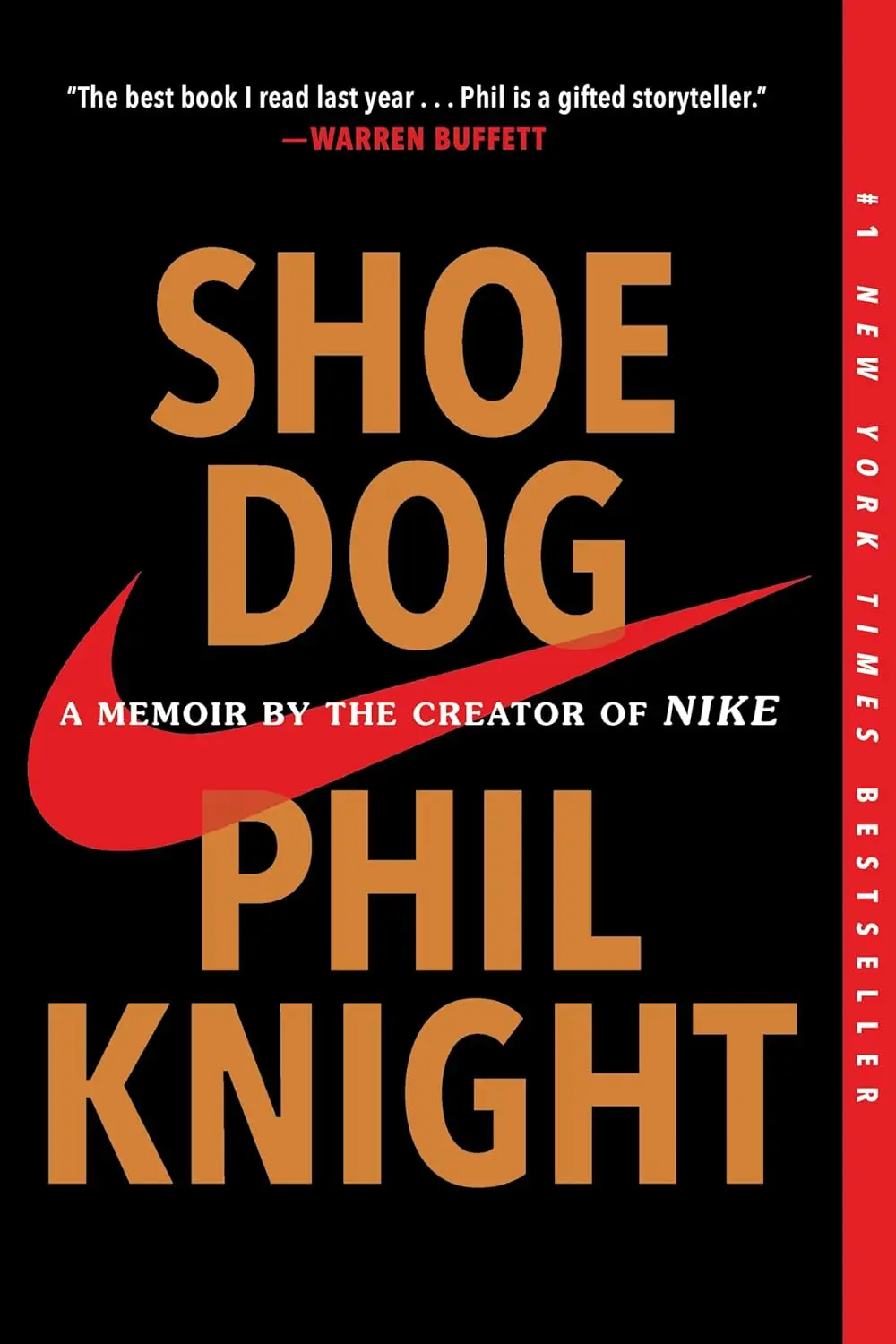
Shoe Dog covers roughly 1962 to 1980, from the time Phil Knight wrote a paper at Stanford Business School about importing Japanese running shoes to the moment Nike went public. What happens in between is a series of near-disasters held together by stubbornness and luck.
Knight begins by borrowing $50 from his father to start Blue Ribbon Sports, the precursor to Nike. He imports Onitsuka Tiger shoes from Japan and sells them out of the trunk of his car at track meets. His early employees, who he calls the “Buttfaces” because of their irreverent meeting style, include a paralyzed runner, an overweight accountant, and a track coach (Bill Bowerman, who became his cofounder and designed the famous waffle sole by pouring rubber into his wife’s waffle iron).
The book is honest about how close the company came to failure, repeatedly. Knight was constantly out of cash. His bank threatened to cut off his credit line multiple times. His Japanese supplier tried to replace him. He got into legal battles that could have bankrupted the company. At one point, the FBI opened a file on him because of a dispute with customs over import duties.
What makes Shoe Dog work as a book is the writing. Knight is not performing CEO wisdom from a position of comfort. The tone is uncertain, sometimes confused, reflecting how it actually felt to build something when the outcome was not at all guaranteed. He admits to being a terrible communicator, a mediocre manager, and emotionally distant from his family during the years he was building Nike.
For founders, the book is useful precisely because it does not pretend that success follows a plan. Knight made it up as he went along, adapted to whatever crisis was in front of him, and was often saved by timing or relationships rather than strategy. Bill Gates called it a great memoir, and Warren Buffett recommended it. It is one of the few CEO memoirs that reads like an actual human story rather than a polished origin myth.
