
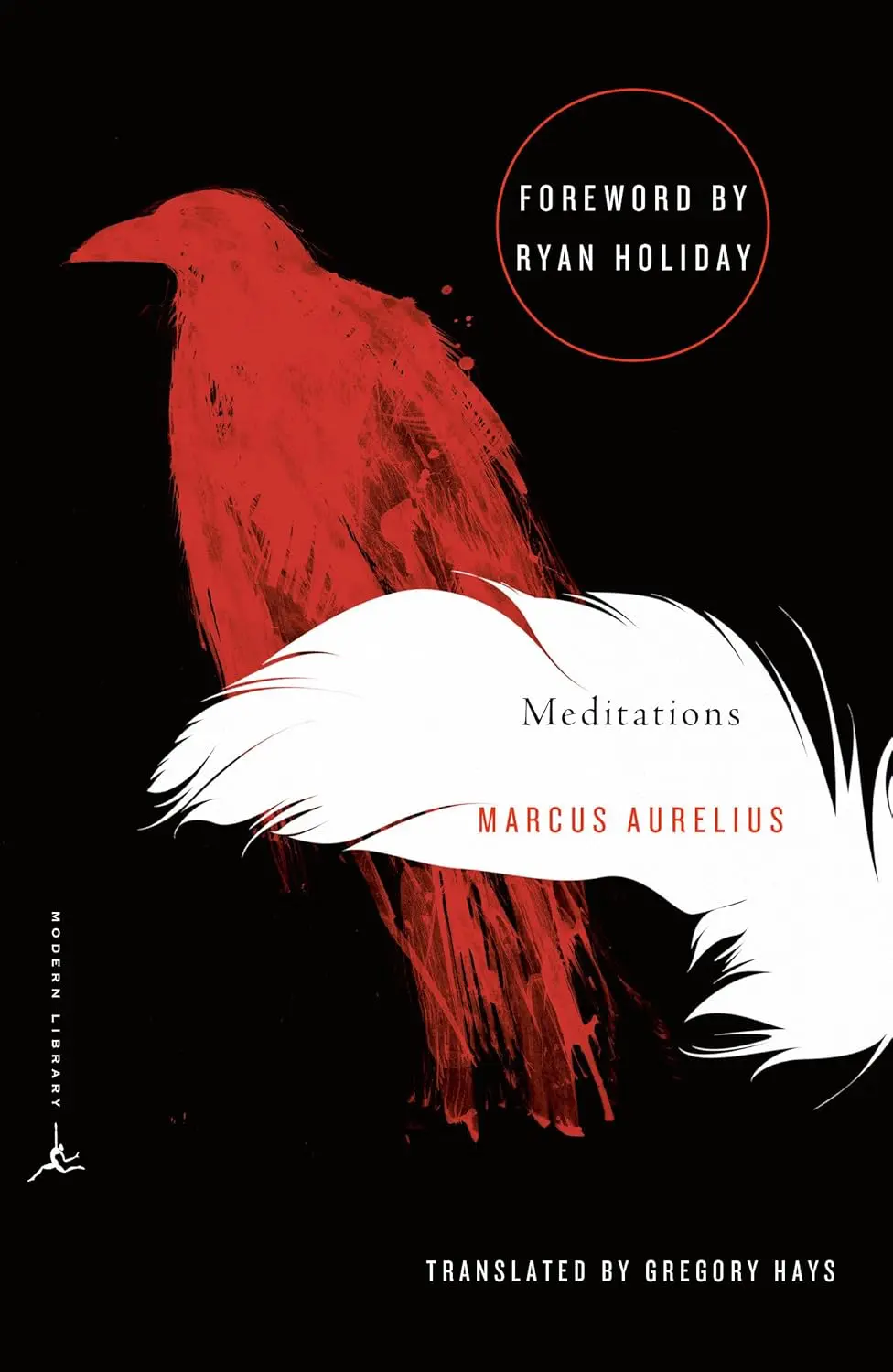
Meditations is not a book in the usual sense. It is a collection of private notes that Marcus Aurelius, Roman emperor from 161 to 180 AD, wrote to himself, probably during military campaigns along the northern frontier of the empire. He never meant for anyone else to read them.
The notes are organized loosely into twelve books, but there is no narrative arc or argument building toward a conclusion. Instead, each entry is a self-contained reflection, sometimes just a sentence or two. Marcus reminds himself to focus on what he can control, to stop worrying about what other people think, to accept that suffering is part of life, and to act with integrity even when no one is watching.
The philosophy behind the book is Stoicism, which Marcus practiced seriously. Stoicism teaches that external events are outside your control, but your responses are not. The goal is not to eliminate emotions but to avoid being controlled by them, especially anger, fear, and the desire for approval. Marcus returns to these themes again and again, which suggests that even a Roman emperor found it difficult to consistently practice what he preached.
For founders and business people, the book’s appeal is practical rather than academic. The situations Marcus dealt with, managing difficult people, making decisions under uncertainty, staying composed during crises, are remarkably similar to the problems that come with running a company. He just happened to be running an empire.
The book is short, usually under 200 pages depending on the translation. The Gregory Hays translation is the most popular modern English version and reads cleanly. Ryan Holiday’s work has done a lot to bring Stoicism back into the business mainstream, and Meditations is where that tradition starts.
A fair warning: because the entries were not written for an audience, the book can feel repetitive. Marcus circles back to the same handful of ideas throughout. But that repetition is also the point. These are reminders, not arguments. The kind of thing you keep on your desk and open to a random page when you need to recalibrate.
