
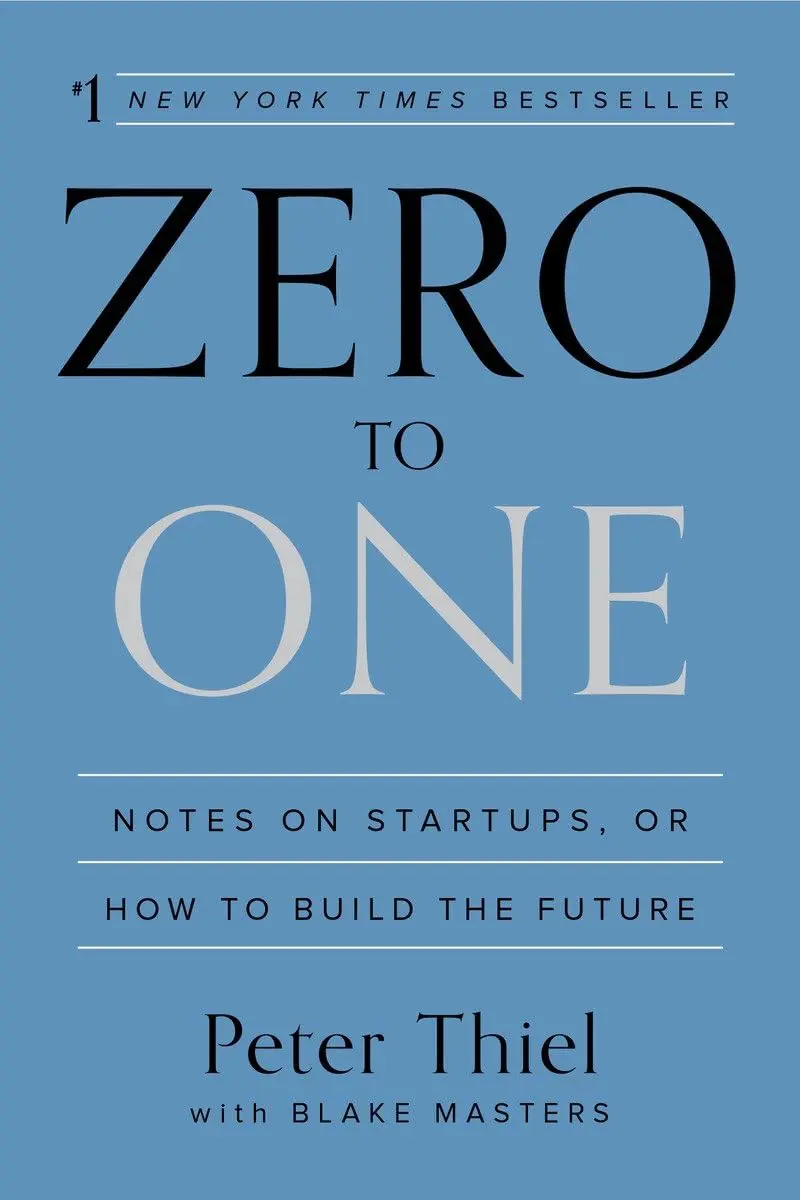
Zero to One started as a set of notes that Blake Masters took during Peter Thiel’s 2012 Stanford class on startups. The notes went viral online, and the book is an expanded version.
Thiel’s central thesis is that there are two kinds of progress. Horizontal progress means copying things that work, going from 1 to n. Vertical progress means creating something new, going from 0 to 1. Thiel argues that real value creation only happens with vertical progress, and that most businesses are stuck competing on horizontal progress, which leads to commoditization and thin margins.
From this, he builds a case for monopoly. Not in the exploitative sense, but in the sense that the best businesses do something so unique that they have no direct competition. Google is a monopoly in search. Thiel argues that competition is overrated and that building a monopoly, by starting with a small, specific market and dominating it before expanding, is the correct strategy.
The book also covers several other topics: the importance of secrets (things that are true but that most people do not believe), why founders tend to be unusual people, why sales and distribution matter as much as product, and why technology companies should aim for durable value rather than short-term growth.
At around 200 pages, Zero to One is short and dense. Thiel writes in a contrarian style that can feel provocative, but the arguments are well-structured and grounded in his experience cofounding PayPal and investing in Facebook, SpaceX, and other companies through Founders Fund.
For founders, the most actionable idea is the “contrarian question” Thiel uses in interviews: What important truth do very few people agree with you on? The answer to that question is where new businesses come from. If everyone already agrees, there is no opportunity. The book is not a step-by-step guide to building a startup. It is a book about how to think about building one, which may be more valuable.
