
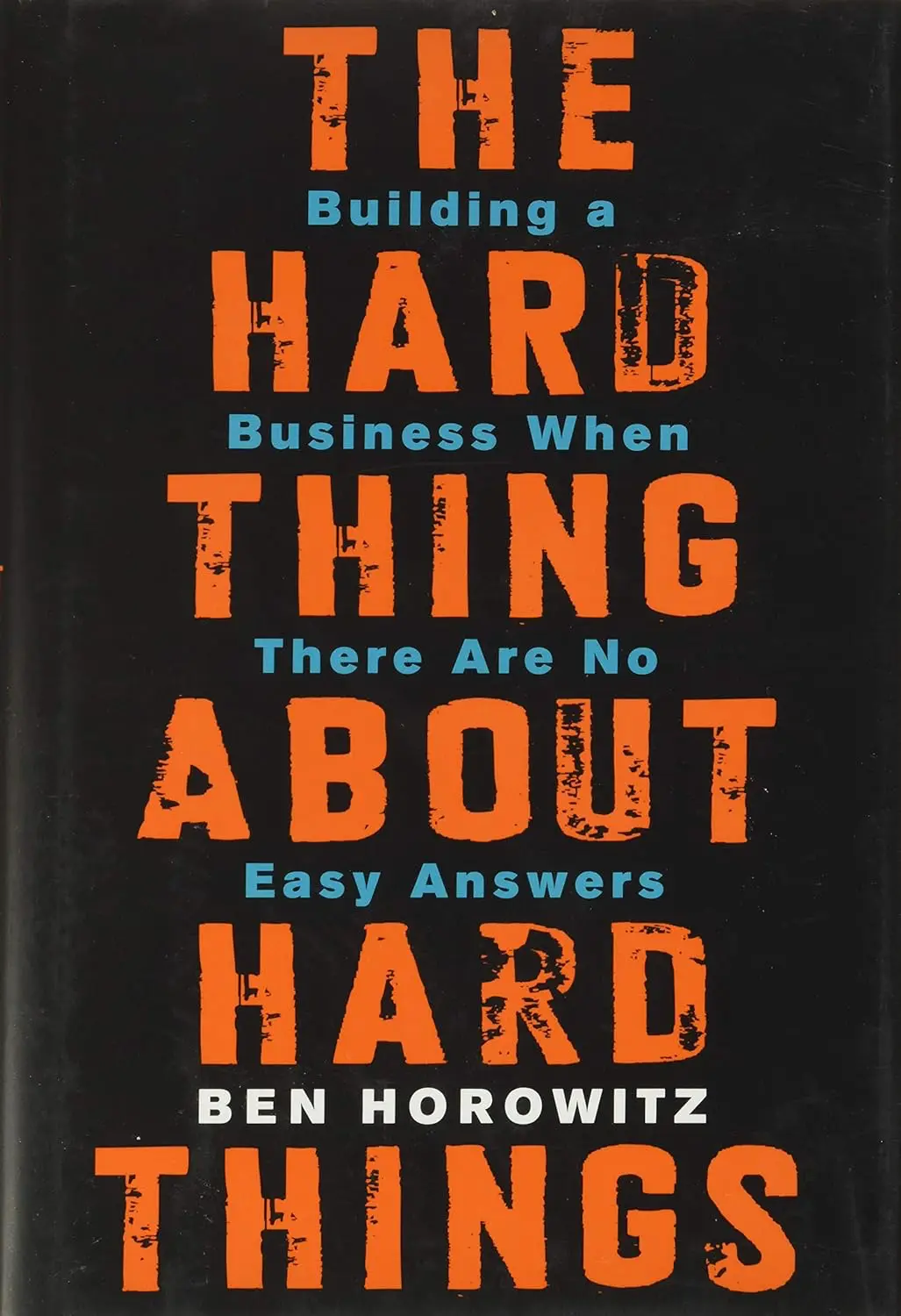
Most business books tell you how to do things right. Horowitz wrote this one about what to do when things have already gone wrong. The book draws on his experience running Loudcloud (later Opsware), a company that nearly died multiple times before he sold it to Hewlett-Packard for $1.6 billion.
The chapters cover specific situations that founders dread: laying off employees, firing executives you personally hired, telling your board the company is about to run out of money, managing your own psychology when you are the only person who knows how bad things really are. Horowitz does not offer formulas for these situations. He describes what happened, what he did, what worked, and what he regrets.
One of the book’s strongest sections covers the difference between “peacetime CEO” and “wartime CEO.” Peacetime requires delegation, empowerment, and long-term thinking. Wartime requires direct control, fast decisions, and sometimes breaking your own rules. Most founders will need to switch between these modes, and Horowitz argues that failing to recognize which mode you are in is a common mistake.
He is also honest about the emotional toll. Running a company, especially through a crisis, is isolating. You cannot share your fears with your team because it would demoralize them. You cannot share them with your board because they might lose confidence. So you absorb it. Horowitz writes about this dynamic without self-pity, which makes it more useful than most CEO memoirs.
The writing style is informal, with hip-hop lyrics opening each chapter and stories told in a conversational tone. If you want frameworks and models, this is not the book. If you want someone who has been in terrible situations telling you what he actually did, it is one of the best books on running a company that exists. It is particularly useful for founders who are past the launch phase and dealing with the messy middle of scaling a business.
