
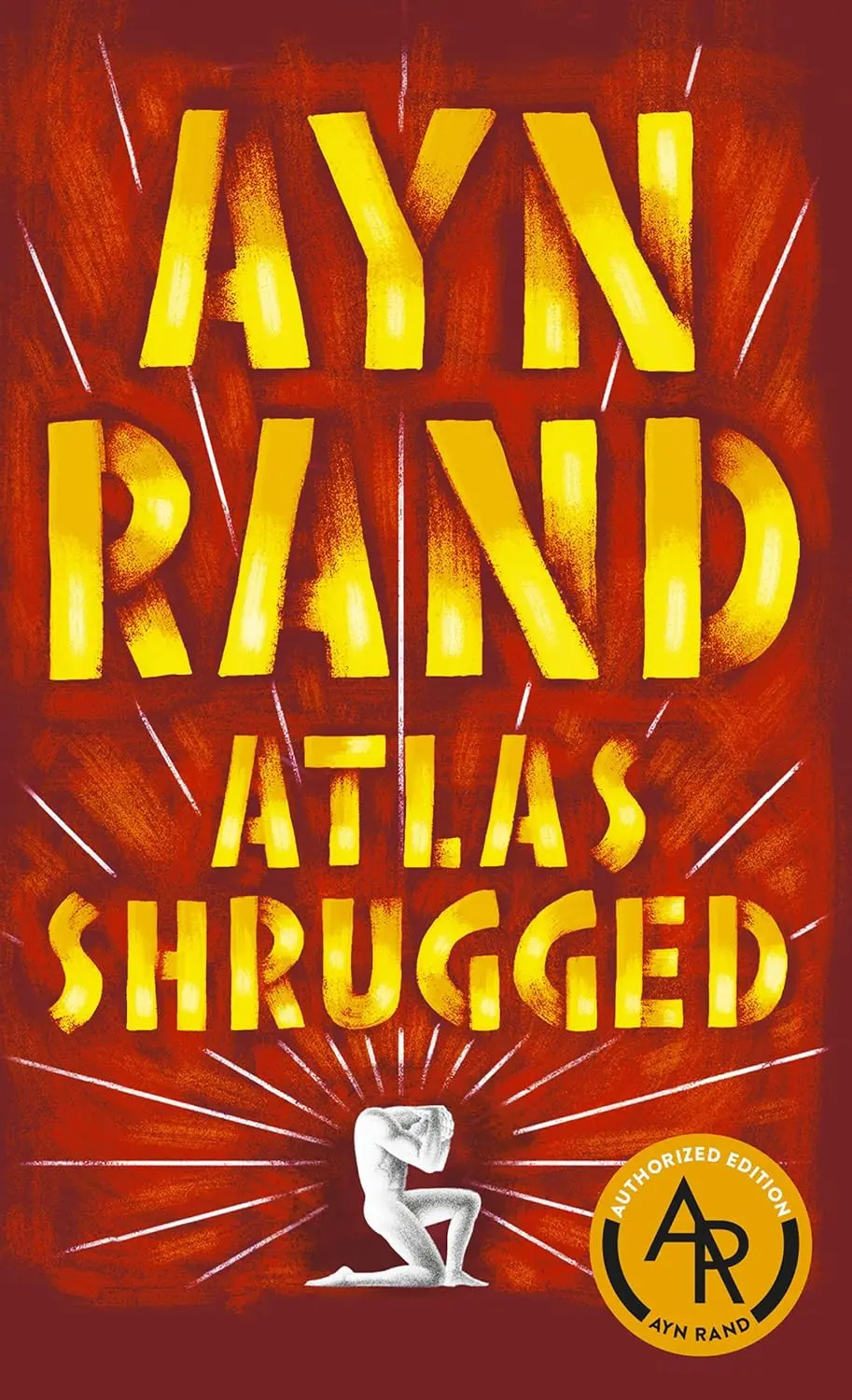
Atlas Shrugged, published in 1957, is set in a dystopian United States where the government is increasingly regulating and taxing productive businesses. The plot follows Dagny Taggart, who runs a transcontinental railroad, and Hank Rearden, who invented a new metal alloy. As the economy collapses, the most competent business leaders, scientists, and artists start disappearing one by one. The mystery at the center of the novel is: who is John Galt, and where are these people going?
The answer, which Rand takes over 1,000 pages to deliver, is that the productive class has gone on strike. They have withdrawn to a hidden valley where they live by Rand’s philosophy of Objectivism: rational self-interest, individual rights, and laissez-faire capitalism. The rest of the world falls apart without them.
It is hard to talk about Atlas Shrugged without talking about the debate it generates. Supporters see it as a defense of individual achievement and a warning against government overreach. Critics see it as a fantasy that glorifies selfishness, dismisses collective responsibility, and paints anyone who disagrees with its politics as a villain or a parasite. Both readings have some merit.
For business readers, the book has staying power because it takes the experience of building something, of pouring years of work into a product or company, and treats that effort with seriousness. Rand writes business decisions and industrial processes with a level of detail that most novelists skip. When Rearden figures out how to pour his new metal, the scene reads like someone who actually cares about manufacturing.
The book is recommended by Elon Musk, Peter Thiel, Travis Kalanick, and Mark Cuban, among others. It works best as a thought experiment about the relationship between individual contribution and collective benefit. Whether you end up agreeing with Rand’s conclusions or arguing against them, the book will make you examine your own assumptions about productivity, fairness, and what society owes to the people who build things. Just set aside some time: it is long.
