
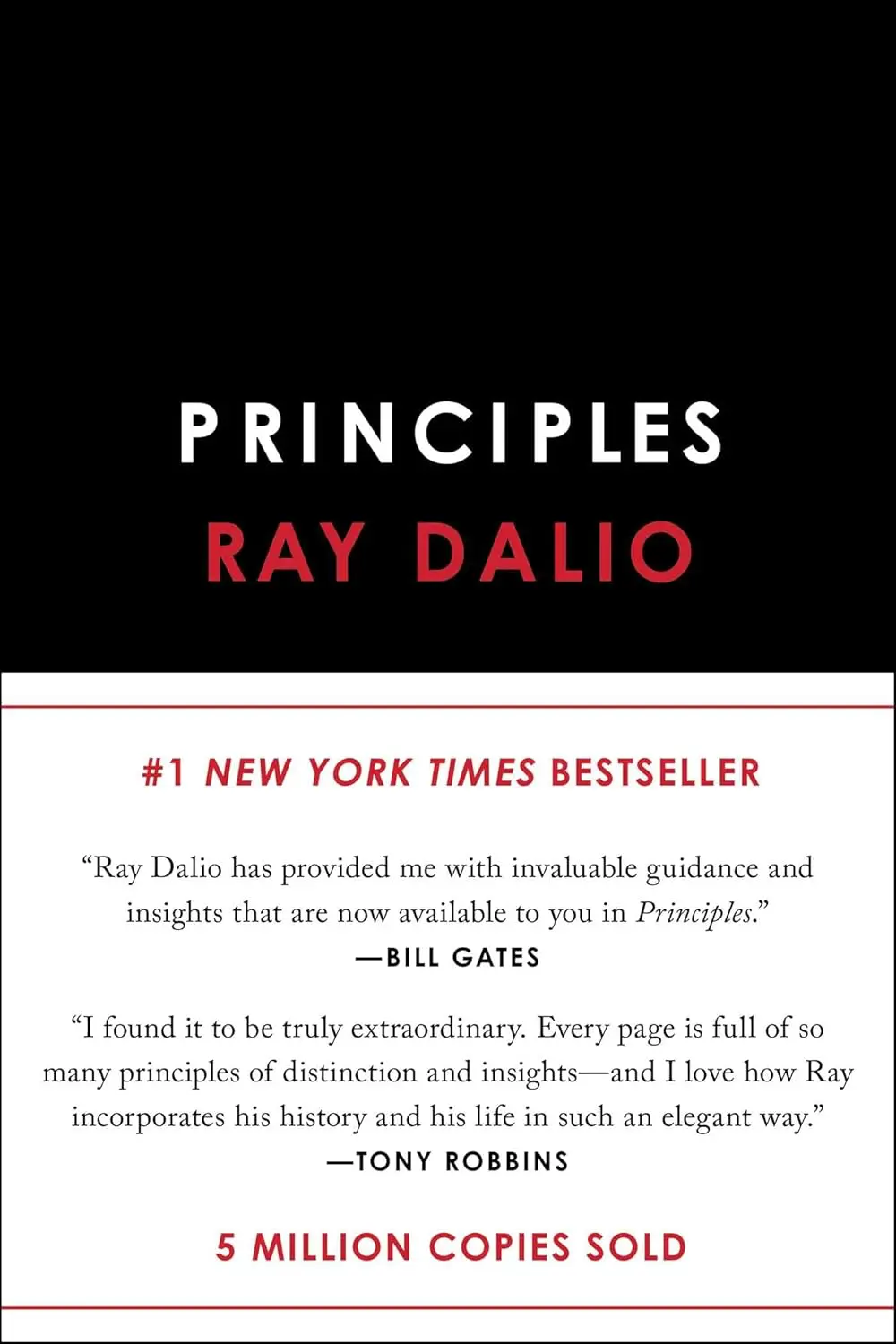
Principles is a 600-page book divided into three parts. The first part is Dalio’s autobiography, tracing his path from a middle-class Long Island upbringing through founding Bridgewater Associates in 1975 and nearly going bankrupt in 1982 after making a spectacularly wrong call on the economy. That failure forced him to rethink how he made decisions, and the rest of the book follows from that rethinking.
The second part covers “Life Principles,” Dalio’s framework for personal decision-making. The core idea is a five-step process: set clear goals, identify problems that stand in the way, diagnose the root causes, design solutions, and execute. He stresses that most people are bad at all five steps and that the key to improvement is radical open-mindedness, which means actively seeking out people who disagree with you and treating their feedback as data.
The third part covers “Work Principles,” which is essentially how Dalio built Bridgewater’s culture. The firm operates on what he calls an “idea meritocracy,” where the best ideas win regardless of who proposes them. To make this work, Bridgewater uses radical transparency (almost all meetings are recorded and shared internally), “believability-weighted” decision-making (people with more relevant track records get more weight in decisions), and tools like “baseball cards” that track each employee’s strengths and weaknesses.
For founders, the most applicable sections are about building systems for decision-making rather than relying on gut instinct. Dalio is persuasive on the point that writing down your principles, literally making your decision-making criteria explicit, forces a clarity that most people never achieve.
The book is long and repetitive in places. Dalio tends to restate ideas in different formulations, which can feel like padding. But the content itself is unusual. Very few people at his level have been this open about how they think, how they failed, and what systems they put in place to fail less. Whether or not you adopt his specific methods, the meta-lesson about systematic thinking is worth the read.
