

LinkedIn is the most underutilized channel for affiliate recruitment. While most program managers focus on email outreach and social media DMs, LinkedIn offers something those channels cannot match: professional context. When you reach out to a potential affiliate on LinkedIn, you are contacting them in a business environment where partnership conversations are expected and welcomed.
This is especially true for B2B affiliate programs, where the most valuable partners are industry consultants, newsletter writers, marketing professionals, and SaaS reviewers who live on LinkedIn. But even consumer-facing brands can find high-quality affiliates here. This guide walks through a complete LinkedIn recruitment playbook, from identifying the right profiles to writing messages that get responses.
Why LinkedIn Works for Affiliate Recruitment
LinkedIn has several characteristics that make it uniquely effective for finding affiliate partners:
→ Professional intent. People on LinkedIn expect business conversations. A partnership pitch here feels natural, not intrusive like a cold DM on Instagram.
→ Rich profile data. You can see exactly what someone does, where they work, what topics they post about, and what kind of audience they have built, all before sending a single message.
→ Content signals. LinkedIn’s feed shows you who is actively publishing content in your niche. People posting regularly about topics related to your product category are pre-qualified prospects.
→ Higher response rates. LinkedIn messages typically see response rates of 10% to 25% for well-targeted outreach, which is significantly higher than cold email averages of 3% to 8%.
If you sell B2B products, LinkedIn should be your primary recruitment channel. The platform’s user base skews toward exactly the professionals who influence purchasing decisions and create content that drives B2B buying behavior.
Step 1: Identify the Right Profiles
The quality of your recruitment depends entirely on who you target. Not every LinkedIn user is a potential affiliate. Focus on profiles that show evidence of content creation, audience building, or industry influence.
Profile Types to Target
→ Industry consultants and freelancers who advise clients in your space. They recommend tools regularly and an affiliate link gives them an earning opportunity for recommendations they are already making.
→ Newsletter and content creators who publish LinkedIn posts with high engagement (50+ likes, meaningful comments). These people have built an audience that pays attention.
→ Marketing professionals and agency owners who manage campaigns for multiple clients. One partnership can generate referrals across several businesses.
→ Bloggers and media professionals who list a personal website or newsletter in their profile. This signals they create content outside of LinkedIn that can carry affiliate links.
→ Course creators and educators who teach skills related to your product category. They often include tool recommendations in their courses and resource lists.
Use LinkedIn’s search filters to narrow your results by industry, location, keyword, and content topic. Search for job titles like “marketing consultant,” “freelance writer,” or “founder” combined with your niche keywords. Also try searching for posts containing your product category to find people actively discussing your space.
If you are serious about LinkedIn as a recruitment channel, consider LinkedIn Sales Navigator. It offers advanced search filters including company size, years of experience, and content keywords that the free search cannot match. At around $80 to $100 per month, it pays for itself if you recruit even one productive affiliate through the platform each month. You can also save leads into lists and set up alerts when prospects post new content, making it easy to engage consistently without manual searching every week.
Another effective tactic is to look at the followers and commenters on posts by industry influencers in your space. The people engaging thoughtfully in the comments of high-profile posts are often content creators themselves, building their own audiences. They are highly discoverable through these conversations and are already demonstrating expertise in your niche.
Step 2: Warm Up Before You Pitch
Cold connection requests with an immediate sales pitch are the fastest way to get ignored on LinkedIn. Take a few days to engage with a prospect’s content before reaching out. Like their posts, leave thoughtful comments that add value to the conversation, and share their content if it genuinely resonates.
This is not manipulation. It is building genuine familiarity. When you eventually send a connection request or message, the prospect has already seen your name in their notifications and is more likely to accept and engage. Two to three meaningful interactions over a week is usually enough to move from “total stranger” to “familiar name.”
Step 3: Send a Personalized Connection Request
LinkedIn limits connection request messages to 300 characters, so you need to be concise. Do not pitch the affiliate program in the connection note. Instead, reference something specific about their profile or content and express a genuine reason for wanting to connect.
Connection Note Example
“Hi [Name], loved your recent post on [specific topic]. I run [your company] and we’re in a similar space. Would love to connect and share some thoughts on a potential collaboration.”
Keep it genuine and brief. The goal of the connection request is to get accepted, not to close a deal. The real conversation happens after they connect.
Step 4: Pitch the Partnership in a Follow-Up Message
Once the connection is accepted, send your affiliate pitch within 24 to 48 hours while the connection is still fresh. This message has more room than the connection note and is where you make your case.
Follow-Up Message Structure
Line 1: Thank them for connecting and reference their work again briefly.
Line 2: Explain who you are and what your product does in one sentence.
Line 3: State the partnership offer clearly: commission rate, cookie duration, what they get.
Line 4: Explain why their audience would benefit from your product specifically.
Line 5: Close with a soft ask: “Would you be open to learning more?” or “Happy to send over the details if this sounds interesting.”
Keep the entire message under 200 words. The most common mistake in LinkedIn outreach is writing messages that are too long. Long messages signal that you are selling rather than collaborating. Respect their time and give them enough information to decide whether they want to know more, not so much that they feel overwhelmed.
Sample Follow-Up Message
“Thanks for connecting, [Name]. I really enjoyed your recent post about [specific topic]. I’m the founder of [Company], and we offer [brief product description]. We have an affiliate program that pays [X]% commission with a [X]-day cookie. Given your audience’s interest in [their niche], I think it could be a strong fit. Happy to share more details if you’re interested. No pressure either way.”
Step 5: Follow Up and Nurture
Not everyone responds to the first message, and that does not mean they are not interested. People are busy, messages get buried, and the timing may not be right. Send one polite follow-up five to seven days after your initial pitch if you do not hear back. Reference your previous message briefly and restate the value without repeating the entire pitch.
If there is still no response after the follow-up, do not keep pushing. Instead, continue engaging with their content organically. Comment on their posts, share their articles, and stay visible. Some of the best affiliate partnerships start months after the initial outreach, when the prospect finally has the bandwidth to explore the opportunity and your name is already familiar.
Common LinkedIn Recruitment Mistakes
Pitching in the Connection Request
Using the 300-character connection note to pitch your affiliate program feels aggressive and transactional. Connect first, build a moment of rapport, then pitch in a follow-up message where you have more room to communicate value.
Sending Identical Messages to Everyone
LinkedIn users can spot copy-paste outreach instantly. Every message should reference something unique about the recipient: a post they wrote, a topic they cover, or a specific reason you think their audience aligns with your product.
Targeting Too Broadly
Connecting with every “marketing professional” on LinkedIn wastes your time and their patience. Narrow your search to people who actively create content in your niche and show evidence of audience building or monetization.
Neglecting Your Own Profile
When you send a connection request, the recipient will check your profile. If it looks empty, incomplete, or unrelated to what you are pitching, they will not accept. Make sure your profile clearly shows who you are, what your company does, and that you are a credible partner.
LinkedIn as Part of Your Recruitment Mix
LinkedIn works best as one channel within a broader recruitment strategy. It excels at reaching professional content creators, consultants, and B2B-focused partners who may not respond to cold emails or Instagram DMs. Combined with other sourcing methods covered in our guide on finding affiliate partners in your niche, LinkedIn fills a critical gap in your recruitment toolkit.
Use Your Own Content to Attract Inbound Interest
LinkedIn recruitment is not only about outbound outreach. Publishing your own content about your product, your industry, and your affiliate program creates an inbound channel where potential partners come to you. Share posts about your product’s success stories, affiliate program milestones, or educational content about your niche. When you consistently show up as a knowledgeable, active presence in your space, people start reaching out to you about partnership opportunities instead of the other way around.
Mention your affiliate program in your LinkedIn profile’s Featured section or About summary. Add a link to your affiliate signup page. This passive placement ensures that anyone who checks your profile during a conversation or after engaging with your content can discover the program without you needing to pitch it directly.
Weekly LinkedIn Recruitment Rhythm
→ Monday: Search for 5 to 10 new prospects using the profile types and search strategies above. Add them to your tracking spreadsheet.
→ Tuesday to Wednesday: Engage with prospects’ content (like, comment, share). Send connection requests to the profiles you identified on Monday.
→ Thursday: Send personalized follow-up messages to connections who were accepted earlier in the week.
→ Friday: Follow up on unanswered messages from the previous week. Log outcomes in your spreadsheet (accepted, responded, joined, declined).
→ Ongoing: Publish one to two LinkedIn posts per week to build your own presence and attract inbound interest.
Track your acceptance rate, response rate, and conversion rate from outreach to active affiliate. Over time, this data tells you exactly how productive LinkedIn is as a channel relative to your other affiliate recruitment efforts, so you can allocate your time accordingly.
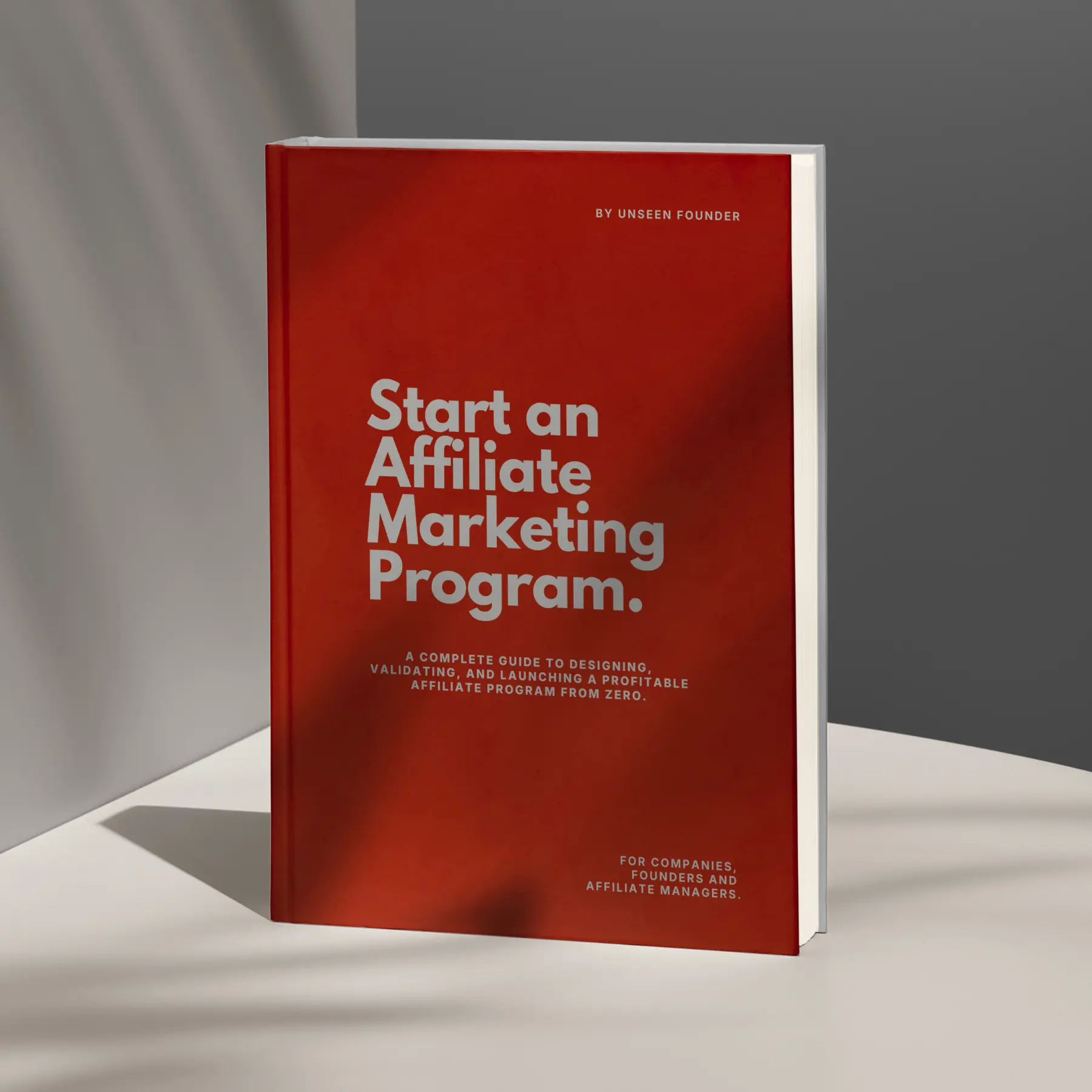
How To Start Affiliate Marketing Program
The Complete Launch Framework
eBook by Unseen Founder
How to Start an Affiliate Marketing Program is a structured, no-fluff framework for companies that want to design, validate, and launch a profitable affiliate program from scratch. It is not a collection of tips.
It is a complete operational blueprint built for founders, marketing leaders, and affiliate managers to launch a profitable affiliate program from zero.
