

Most people see affiliate marketing as a simple “get-rich-quick” scheme, slap a few links on a blog and watch the money roll in. But the reality for genuinely successful affiliate marketers is far different. Their strategies are often surprising, counter-intuitive, and focused on building a long-term business, not chasing short-term tricks.
You’ll Earn “Accidental” Commissions Thanks to Cookies
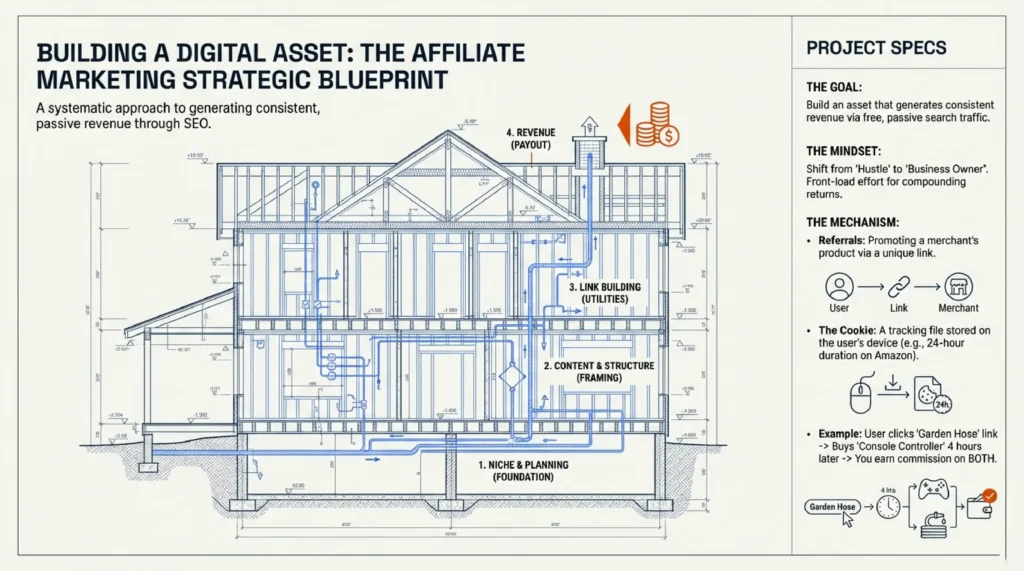
The first surprising truth is that you’ll often get paid for products you never even promoted. This happens thanks to a small piece of technology called an affiliate cookie.
When a visitor clicks your unique affiliate link, a cookie is stored on their device. This cookie helps the merchant attribute the sale back to you. However, it also has a set duration, and during that time, it tracks more than just a single product.
Consider this example from the course: a visitor reads your post about gardening hoses and clicks your affiliate link to Amazon. They get distracted and leave the site. Later that day, they go directly back to Amazon and buy the garden hose plus a game console controller. Because Amazon’s affiliate cookie has a 24-hour duration, you earn a commission on both the garden hose and the unrelated game controller.
Cookie durations vary by merchant, Amazon’s is 24 hours, while Target’s is 7 days. This concept is powerful because it rewards you for getting the initial click. Over time, these “bonus” commissions on unrelated items can add up to a significant portion of your revenue.
For Consistent Growth, SEO is King (Forget Social Media and Ads)
Many beginners assume that the key to affiliate traffic is a massive social media following or a big ad budget. Social media traffic is often inconsistent because platforms are designed to surface new content, making it a poor fit for evergreen affiliate pages. Paid ads are high-risk and expensive, a quick way for beginners to lose money.
The recommended primary traffic source for affiliate sites is Search Engine Optimization (SEO). Its key benefits are that it is “free, consistent, and passive.”
Now, search traffic is free, consistent and passive. And the way you get search traffic is through a marketing method called search engine optimization, or SEO. It’s the primary traffic source I recommend and it’s what many multi-million dollar affiliate websites rely on.
This strategic focus on SEO is critical for beginners because it builds a sustainable, long-term asset. Instead of constantly paying for clicks or chasing fleeting social media trends, you create content that generates traffic and revenue for months or even years without continuous financial investment.
To Dominate a Market, You Must First Shrink It
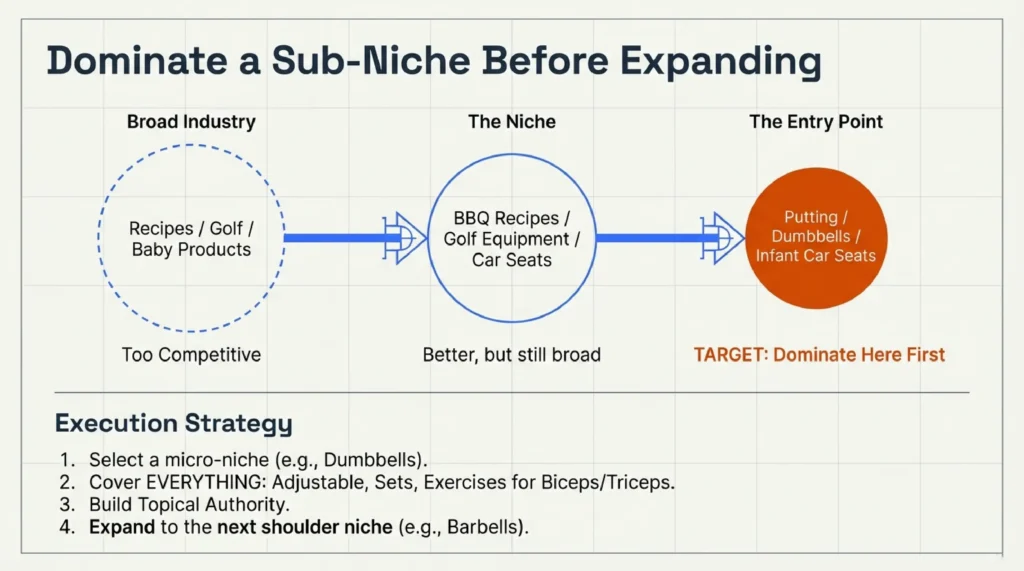
The common impulse for a new affiliate is to choose a broad topic to maximize their potential audience. But the winning strategy is the exact opposite: start with a very focused niche. For instance, instead of creating a generic site on “all types of recipes,” you should start with a “barbeque recipes site.”
The goal of this approach is to build “topical authority.” By thoroughly covering a narrow subject, you position your site as the go-to expert in the eyes of both visitors and search engines. The recommended strategy is to master one sub-niche (e.g., dumbbells) by creating all the content related to it before expanding to the next logical sub-niche (e.g., barbells).
This “go small to win big” strategy works because it allows new sites to compete effectively. By avoiding the hyper-competitive landscape of broad topics, you can build a strong, authoritative foundation that supports future expansion into related areas. This focused foundation of topical authority is not just for show, it is the critical ingredient that makes the link-building strategy we’ll discuss later not just possible, but powerful.
The Highest Commission Rate Doesn’t Always Mean the Highest Profit
One of the most common mistakes beginners make is choosing affiliate programs based solely on which one offers the highest commission percentage. This overlooks two critically important factors: brand reputation and, most importantly, conversion rate. A high commission is worthless if nobody actually buys the product.
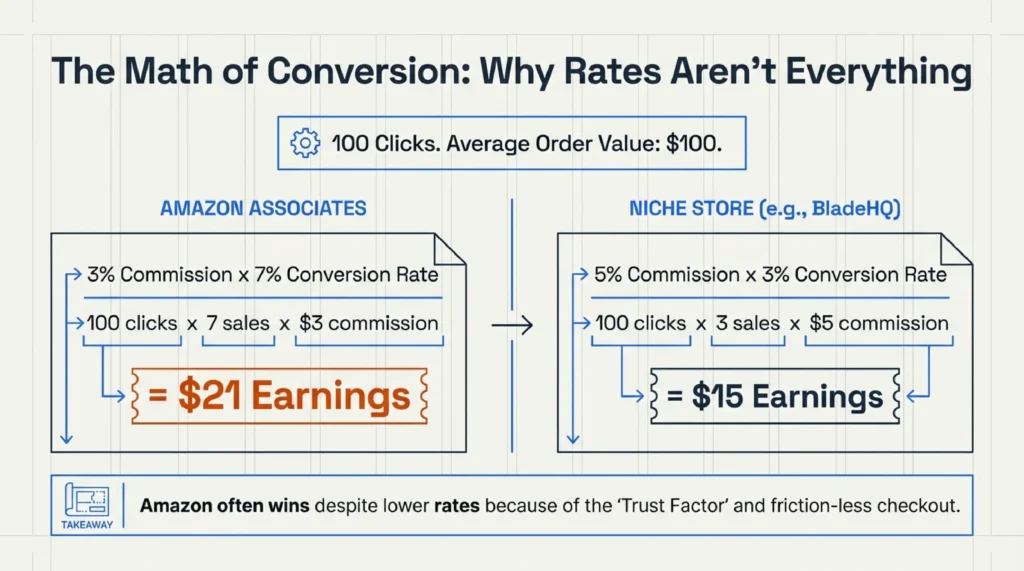
Imagine you send 100 clicks to two different affiliate programs, both for a $100 product:
- Amazon: Pays a 3% commission but has a strong brand reputation and a high 7% conversion rate.
- Calculation: 100 clicks * 7% conversion rate * 100 product value * 3% commission = 21
- BladeHQ: Pays a higher 5% commission but has a lower 3% conversion rate.
- Calculation: 100 clicks * 3% conversion rate * 100 product value * 5% commission = 15
Despite offering a lower payout rate, Amazon is the more profitable choice in this scenario. This highlights the importance of analyzing the entire sales process from click to purchase, rather than just focusing on the final commission number.
Your Most Powerful Content Won’t Directly Sell Anything
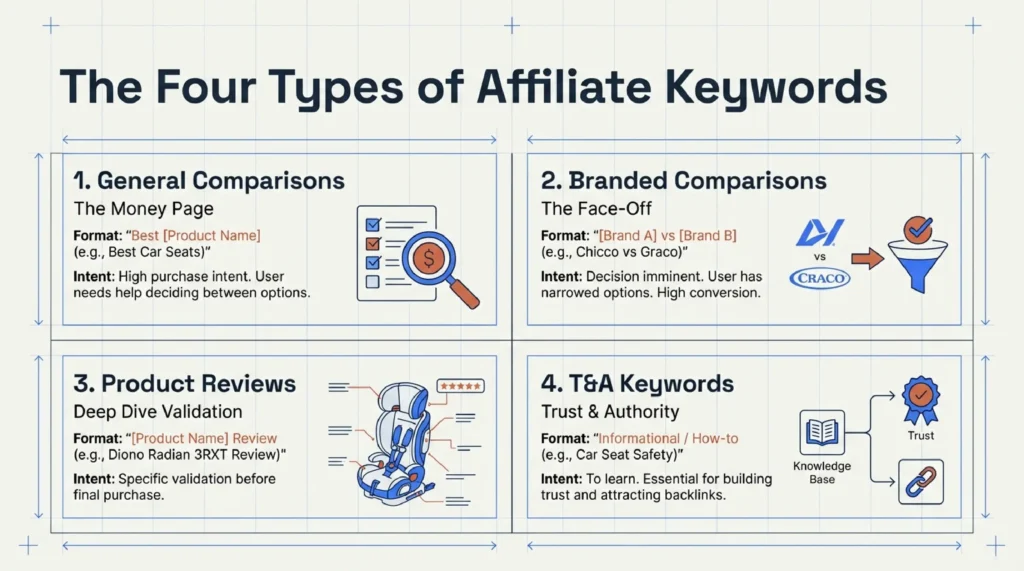
It seems logical that every piece of content on an affiliate site should aim to sell something. However, the most strategic and powerful content you create often won’t. This involves creating purely informational content that targets “Trust and Authority” (T&A) keywords.
Helpful, non-commercial content (e.g., an article on “car seat safety”) is much easier to get backlinks to than overtly commercial content (e.g., a review of the “best car seats”). Other bloggers and websites are more willing to link to an objective, valuable resource than to a page designed purely to make sales. (e.g. this article about affiliate marketing 😉 )
This insight is the foundation of the “middleman method” strategy:
- Step 1: Create helpful informational content that naturally attracts valuable backlinks from other sites.
- Step 2: As that informational page gains authority from those links, you strategically pass that authority to your commercial “money pages” (like product reviews and comparisons) by adding internal links from the informational post to them.
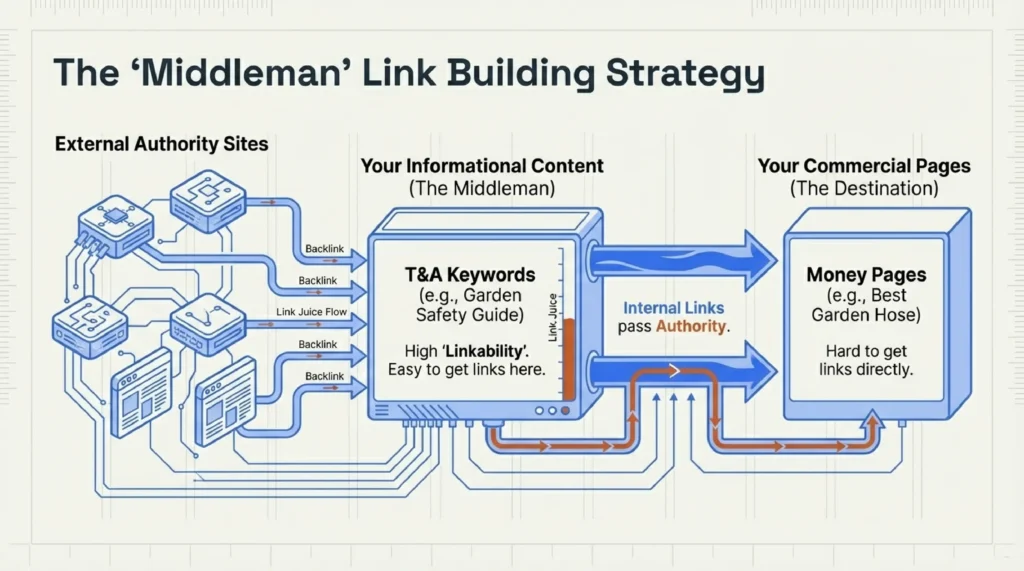
This informational page acts as a “link hub,” absorbing authority that would be nearly impossible for your commercial pages to earn on their own. By strategically linking from this hub to your money pages, you effectively funnel that hard-won authority, giving your product reviews the ranking power they need to generate revenue. This is the key to building a sustainable business, not just a thin affiliate site.
Build a Business, Not Just a Blog
Successful affiliate marketing isn’t a get-rich-quick scheme, it’s a serious business that requires strategy, patience, and a relentless focus on providing real value. The most effective methods are often the most counter-intuitive, prioritizing the slow build of niche authority and a trusted resource over chasing quick wins and high commission rates.
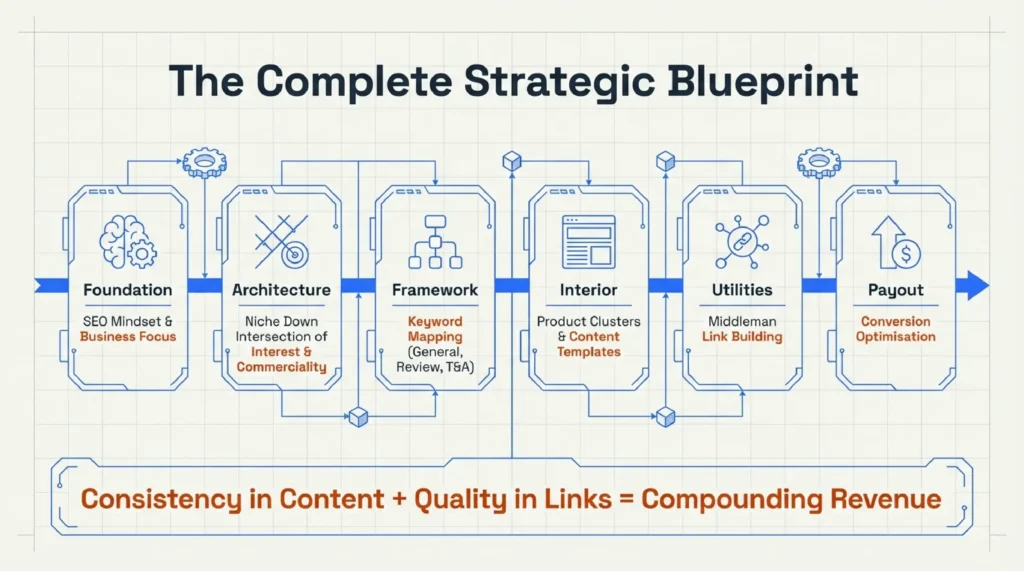
Now that you see the real strategy behind affiliate success, which of these principles will you apply first to turn your content into a sustainable business?

How To Start Affiliate Marketing Program
The Complete Launch Framework
eBook by Unseen Founder
How to Start an Affiliate Marketing Program is a structured, no-fluff framework for companies that want to design, validate, and launch a profitable affiliate program from scratch. It is not a collection of tips.
It is a complete operational blueprint built for founders, marketing leaders, and affiliate managers to launch a profitable affiliate program from zero.
